
Every year, Muslims around the world welcome Hari Raya with great joy. Holidays in Islamic tradition are called “îd”. In Arabic, “îd” stems from the word that refers to al-mawsim, namely seasons or events that repeat periodically. In translation into Indonesian, “îd” often equated with the word "holiday".
One of the most anticipated holidays is Eid al-Fitr. The name "Eid al-Fitr" itself has a story of its own. It is so named because on this day, Muslims who have fasted throughout the month of Ramadan officially break their fast.
After a full month of abstaining from hunger, thirst, and lust, the 1st of Shawwal marks the end of the obligation to fast. In fact, fasting is actually prohibited on this day. This emphasizes that Eid al-Fitr is a time for joy and gratitude in the face of victory.
This celebration begins with congregational Eid al-Fitr prayers, a worship that has been prescribed since the first year the Prophet Muhammad SAW arrived in Medina. This prayer is not just a ritual, but also a form of collective gratitude for the blessing of completing the fast.
This is based on the Hadith of the Prophet Muhammad SAW:
Quotes وسلم وأبو بكر وعُمر يصلون العيدين قبل الخُطْبة
“"From Abdullah bin Umar, he said: "The Messenger of Allah, Abu Bakr, Umar prayed two Eid prayers before the sermon was delivered."“ (HR. Bukhari-Muslim).
However, does Eid al-Fitr really mean “returning to purity”?
Many associate Eid al-Fitr with the process of purifying the soul, as if Ramadan is a spiritual journey to erase sins, and Eid al-Fitr is the culmination of humanity's return to its pure nature.
Many believe that etymologically, "fitri" shares the same root as "fitrah." However, this meaning is more of a philosophical interpretation than a literal definition. Eid al-Fitr, in the context of sharia, more emphasis on happiness after fulfilling obligations, not a guarantee that someone has been freed from sin.
Holiness, in the end, is a hope to be continually pursued, not a reward to be automatically obtained. “tattaqûn” in Surah al-Baqarah verse 183, for example, it does not refer to piety as a title attached to the fasting person, but rather a continuous process towards better behavior. Piety is a journey, not a final stamp.
So, does Eid al-Fitr really mean "returning to purity"? Literally, perhaps not. However, Eid al-Fitr serves as a reminder that purity is a goal to be continually pursued, not an instant reward. Every step along the Ramadan journey, and every act of kindness shared, brings us closer to that goal, step by step, year after year.
Hopefully the process will reach piety We continue to present it, in every step of our journey and our good deeds outside of Ramadan. To present it piety and return to nature, we must remain steadfastness carry out sharia and the obligations that have been entrusted, such as carrying out the acts of worship that we have practiced in the holy month of Ramadan.
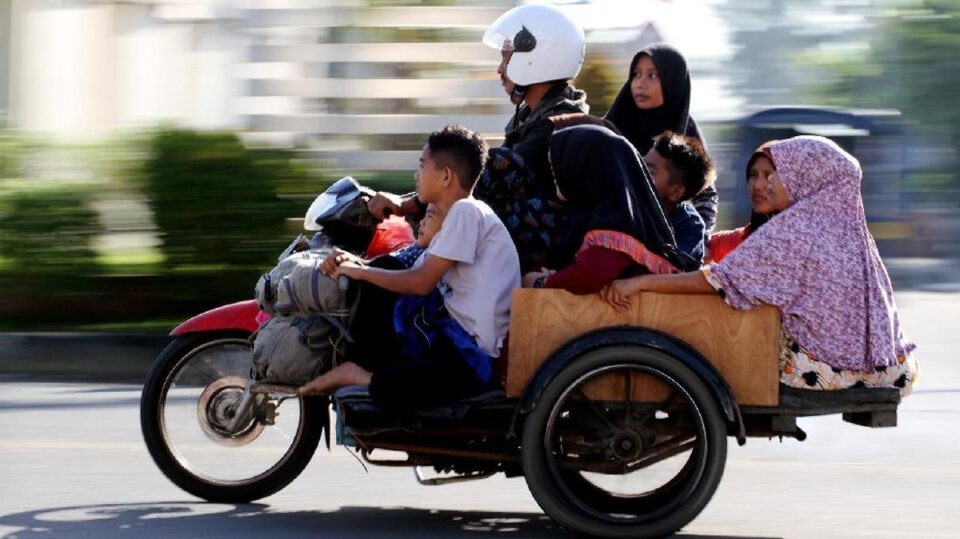
We pray that those who are traveling back to their hometowns will have a smooth journey, that their affairs will be made easy, and that they will arrive home healthy and safe. Amen.. Amen.. Ya Rabbal Alamin.
Wallhua'lam bish shawab
Photo Source: Google.com
Written by: Ustadz. Fathurrahman, S.Sos. Chairman of the Association of Religious Instructors of the Republic of Indonesia (IPARI) West Sumbawa Regency (KSB).

1 comment
How has your experience of fasting and Eid al-Fitr changed your views on purity and piety? Do you feel there's a specific moment during Ramadan that helps you get closer to your natural state?