
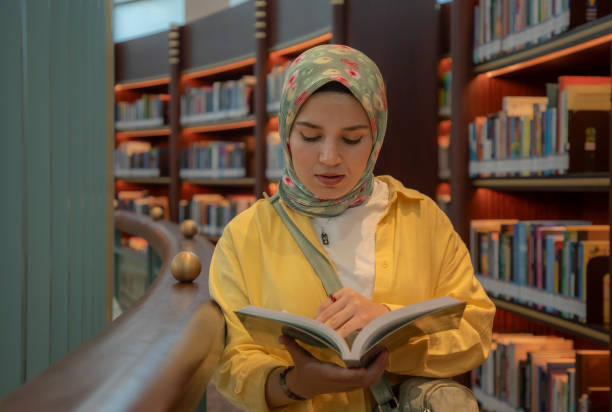
“Iqra'!” — The first command that Allah revealed to the Prophet Muhammad ﷺ through the Angel Gabriel became a symbol of the beginning of scientific civilization in Islam. (al-'Alaq: 1–5). This command does not only mean reading written texts, but also reading nature, social phenomena, and the meaning of life.
In the context of Islamic education, “"Iqra"’ not just cognitive instructions, but a spiritual invitation to continue learning, thinking critically, and understanding God's creation. The literacy values contained in this verse become the main spirit of Islamic education all time. (Lintang et al. 2025 ).
Meaning “"Iqra"’ in Islamic Perspective
Etymologically, “"Iqra"’ means reading, conveying, and understanding. In classical interpretation, this word is understood as a command to activate all the potential of the mind and heart in seeking knowledge (Hamdan, M. (2016) as a path to truth.
Through reading, a person can broaden their horizons and knowledge, as well as strengthen their critical thinking skills. Therefore, it is important for every individual to continue learning and reading to develop themselves and achieve success in life.
For example, when someone reads a book about history, he can understand the journey and development of humans from time to time, and gain new insights to reflect on the meaning of life.
By deepening understanding through reading, a person can become a wiser and more responsible person in living life.
This confirms that literacy in Islam is not just reading texts, but also includes reading the signs of Allah — reading the verses of Kauniyah in the universe (HS, AH (2020) and understanding the meaning behind them.
By being able to read the beauty of the universe, Muslims are taught to reflect on the greatness of Allah and appreciate His creation. Thus, literacy in Islam is not only related to knowledge of religious texts, but also involves understanding and practicing God's teachings through the universe He created.
At this point, reading in Islam is a worship that connects humans with God through knowledge and understanding obtained from the universe. By deepening their understanding of Allah's creation, it is hoped that Muslims will be able to get closer to Him and appreciate His existence more.
Literacy in Islam should not only encompass knowledge of religious texts, but also involve practicing God's teachings through the beauty of the universe, which is evidence of His greatness. Through the practice of reading, humans can strengthen their faith and devotion to the Almighty God. (Jayana, TA, & Mansur, MP (2023)
Literacy as the Foundation of Islamic Education
Since its inception, Islamic education has placed literacy as the main pillar of civilization. Previous scholars such as Al-Ghazali, Ibnu Sina, and Al-Kindi not only read, but also wrote and produced great works that became world scientific heritage (Imam, Sayuti Farid, et al. 2015).
They taught not only religious knowledge but also general knowledge such as mathematics, astronomy, and medicine. This demonstrates the importance of literacy in the development of Islamic civilization from the earliest times to the present day. These scholars have made significant contributions to enriching the Islamic world. treasury world science and become an example for future generations.
Tradition writing and reading In Islam, literacy is a reflection of the awareness that knowledge must be passed on. Therefore, literacy is the foundation of tafaqquh fid-din — deep understanding of religion and life
Literacy Challenges in the Modern Era
On the threshold of the digital era, access to information is so easy, but not all information brings good. Islamic education faces a major challenge: how to instill critical and spiritual literacy so that students are able to sort information wisely? (Syifa, A., & Ridwan, A. (2024). So that they are not influenced by incorrect or detrimental information.
By combining critical and spiritual literacy, students will have a deeper understanding of Islamic teachings and be able to make wise decisions when faced with various information received from various sources.
This will help them become stronger and more steadfast individuals in their religious beliefs. Literacy in Islam must be oriented towards Qur'anic values, not just the ability to read, but also the ability to understand and apply knowledge in real life (Jayana, TA, & Mansur, MP (2023)), including in social, economic, and political interactions.
Therefore, literacy in Islam is not only about mastering the sacred texts, but also about making His teachings a guideline in every aspect of life so as to create a just, fair, and dignified society.
Therefore, it is important for Muslims to continue to improve their religious literacy so that they can live a life in accordance with Islamic teachings and produce good benefits for themselves and the surrounding community.
Building a Spirit of Literacy in Islamic Educational Institutions
To revive the spirit “"Iqra"’, Islamic educational institutions need to build a culture of literacy rooted in Islamic values. Activities such as reading the Qur'an with contemplation, writing spiritual reflections, and discussing classical texts can be effective media for fostering a holistic and in-depth spirit of literacy among students (Nasrullah, N., & Damasari, AF (2019).).
By strengthening reading and writing skills in a religious context, students will become more open to a broader understanding and understanding of Islam. Furthermore, through collaborative discussion and reflection, students can also learn to appreciate and understand various perspectives within Islam, thereby fostering a spirit of “"Iqra"' can continue to be maintained and developed in the future.
In this way, students not only gain knowledge, but also experience spiritual engagement — the inner connection between knowledge, faith, and good deeds is the core of holistic education. Thus, the learning process focuses not only on cognitive aspects but also on the development of religious and moral values.
This will help students to not only become intellectually intelligent individuals, but also have a strong spiritual awareness in living their daily lives.
Implementation of Values “"Iqra"’ in Modern Life
In today's fast-paced and distraction-filled modern life, the meaning “"Iqra"’ seem marginalized by instant culture. Many students prefer consuming short information via social media rather than reading in depth.
In fact, the spirit “"Iqra"’ In fact, it guides humans not to stop at the surface of information, but to explore the meaning behind it. In this context, Islamic educators have a moral responsibility to re-instill the values of science and intellectual honesty amidst the rapid flow of digitalization (Aziz, AA (2025)) as an effort to maintain the sustainability of the spirit of "Iqra'". “Iqra''.
By strengthening a culture of literacy and critical thinking, Islamic educators can help students become not just passive consumers of information, but also producers of quality information. Therefore, the spirit of “"Iqra"' can continue to live and be a guide in navigating a world full of information and distractions.
For example, Islamic educators can teach students how to conduct critical and in-depth research on religious issues using reliable sources. They can also guide students in composing writings that combine religious and scientific knowledge in a balanced and structured manner.
Teachers and lecturers in Islamic educational institutions can instill this spirit by integrating Quranic literacy into every subject. For example, when teaching science, educators can link verses from the Quran to the Quran. Kauniyah about the creation of nature; when discussing history, teachers can invite students to explore the stories of Muslim scientists for inspiration.
It is important to know that learning does not only touch on cognitive aspects, but also forms spiritual awareness that all knowledge comes from God.
Furthermore, the practice “"Iqra"’”" can also be realized through a culture of research and scientific writing among students. Activities such as school journals, Islamic essay competitions, or classical book reading clubs can strengthen students' scientific character and train them to think analytically and reflectively.
This activity is not just an academic event, but also a media tazkiyah an-nafs — purification of the soul through knowledge and useful works. (Sofanudin, A. (2020). By involving themselves in these activities, students can hone their ability to convey ideas systematically and argumentatively.
In addition, through the research and writing process, students will also learn to appreciate the learning process itself, not just the end result achieved. Thus, the practice “"Iqra"’” does not just stop at reading, but also involves a deep thought process and the development of a strong character.
Quranic Literacy as a Solution to the Moral and Social Crisis
Besides serving as an intellectual tool, Quranic literacy also plays a crucial role in shaping societal morals. The ethical crises occurring in the modern era, such as the spread of hoaxes, consumer culture, and declining empathy, can be addressed by fostering literacy based on Quranic values.
Reading and understanding the Qur'an not only produces knowledge, but also fosters moral awareness and social responsibility. (Maarif, M. Nurul Maarif, et al 2025) as well as strengthening the values of honesty, justice and compassion in individuals.
Quranic literacy is not only a tool for enhancing intellectual intelligence, but also a means to improve human behavior and attitudes in everyday life. A sound understanding of the teachings of the Quran will enable society to face the various moral challenges of the modern era and make the world a better place for all.
Islamic education must instill the idea that literacy is not merely a technical skill, but also a means of strengthening morals. Students who enjoy reading the Quran and its interpretations will more easily understand the values of truth, justice, and compassion taught by Islam.
Literacy in Islam has two dimensions: a spiritual dimension that connects humans with God and a social dimension that guides humans toward building a dignified civilization. Both must be balanced to ensure the spirit of “"Iqra"’ truly become the basis of the progress of the people.
Closing/Conclusion
Order “"Iqra"’ became the starting point of the entire Islamic education movement. Literacy is not just the ability to read and write, but also an effort to understand the meaning of life in the light of revelation.
If Islamic education wants to continue to produce generations who are knowledgeable, moral and civilized, then Spirit “"Iqra"’ must be turned back on — starting from the habit of reading the Qur'an, studying knowledge, to writing as a form of worship.
And Allah knows best
Written by: Nurul Hidayanti. Fifth Semester Student. Faculty of Teacher Training and Education. English Language Education Department. Cordova University
