
The feature film "Jungle," released in October 2017, is based on a true story about a determined man (Daniel Radcliffe) and three friends who accidentally meet during a long vacation in Bolivia. Long story short, they make a pact to visit the heart of the Amazon rainforest. The interesting thing that astonished the audience with the story in this film is how they managed to survive in the middle of the Amazon jungle. The more challenging story is about their challenge to navigate the "dead road" climb, dubbed the most dangerous road in the world, winding from the foot of the mountains to the highest peak.
The Treng Tali on Rarak Hill is perhaps the equivalent of a "dead road" in the Bolivian mountains. The steep, steep incline is steep. If a vehicle malfunctions or human error occurs, don't blame the incline; you'll be thrown far downhill or into the jungle. That's roughly what it's like to get to the Bolivian mountains and the slopes of Rarak Hill. It's quite a test of courage.
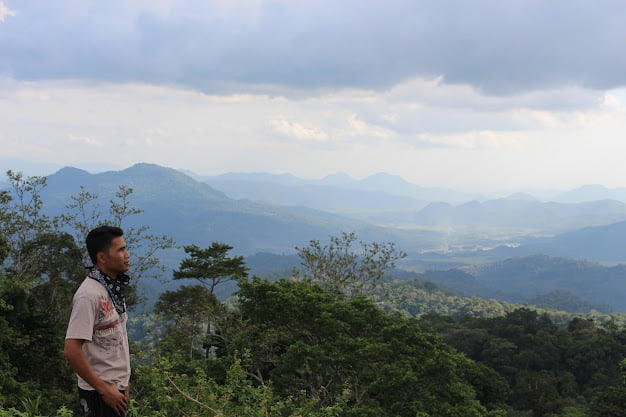
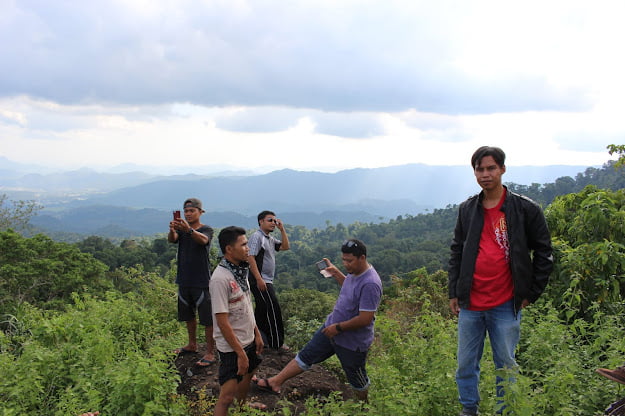
What's truly captivating is that after navigating the steep climb, the eyes are forced to be captivated by a panoramic view of a real natural painting. When riders or visitors reach the fifth (final) climb, known by locals as the "signal pruak," they are treated to a feast for the eyes. Simply turning around reveals a verdant landscape of forest and surrounding hills. A panoramic view of nature stretches out from the sharp tip of the signal pruak. The shimmering beauty of the Rarak hills stretches far before our eyes. Subhanallah, the beauty of the Creator's creation.
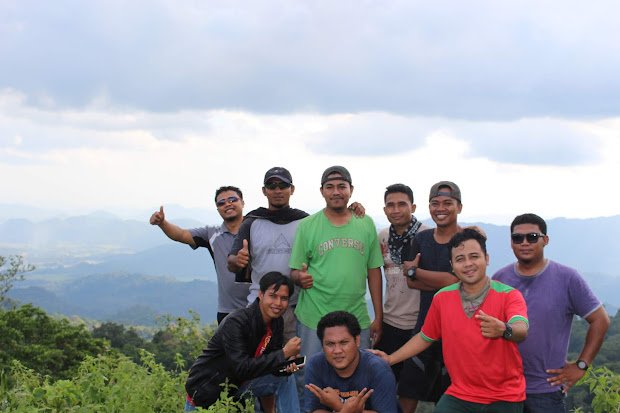
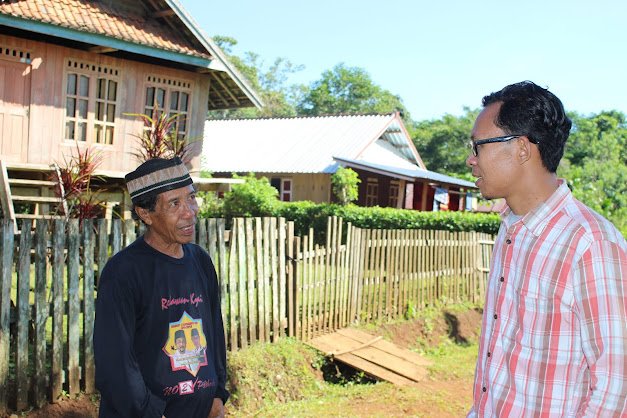
The beauty of the hills and mountains in Rarak village is also directly proportional to the beauty and hospitality of its residents. Like any other village, the residents of Rarak welcome any visitor with a smile and a friendly greeting. Whether it's just a casual greeting or a welcoming language that captivates visitors. Perhaps in today's kids' parlance, "make yourself at home," is more or less the message they want to convey to visitors.
Visitors shouldn't feel awkward, as many eyes directed at you indicate respect for your presence in their community. Undeniably, anyone arriving in a new place will attract the attention of the local community. This means there's nothing unusual about this unfamiliar welcome. This is the normal standard of welcome for the residents of Rarak and other villages in general.
Newcomers can immediately communicate casually and freely with the residents. Because they will definitely throw out pleasantries "silamo sia ngesar"[1] or "sia ngesar mo loka"[2] If visitors hear pleasantries like that, then your arrival has been accepted into the community of the Rarak villagers who are known to live simply. Maybe it will be a little different from the primitive residents of the Amazon forest who are known to be aggressive and selective towards newcomers. Newcomers in the Amazon forest will be showered with poison arrows if they cannot communicate in the language of the Amazon residents who tend to be conservative (old-fashioned). Please find a film entitled "Lost in Amazone" in the film it is told in detail how the British army expedition to control the Amazon forest to enter their map and power. A political conspiracy that is quite risky!

Bolivia's Death Road
If the Amazonian people are a conservative group still far from modern interactions, the Rarak people are a step more progressive and transformative in keeping with the demands of the times. They can now enjoy signal services via cellphones. However, the problem is, they have to run to the signal point while looking at the phone to detect the signal. After that, they can communicate without interruption. It takes struggle and determination to achieve their goal: the hope of getting a full signal so communication doesn't drop out during normal streaming or live chats.
Okay, let's forget about the classic comparison between these two types of villagers for a moment. I'll focus on discussing the five climbs you must tackle if you're destined to visit Rarak Village. Or if you've already been there and forgotten the names of the climbs, perhaps this article can help you recall the terrifying memories of navigating those deadly climbs.
Stone Slab
This incline is a first-time introduction that will make motorcycle and car riders extra cautious. The natural setting, with trees growing freely on either side of the road, is a captivating experience on this rocky incline. Brave turns sometimes confront you without any road signs, unlike city highways. A sharp eye for direction is key to avoiding the wrong turn. Rocks, ranging from small to large, are sometimes unavoidable. This will train riders to pick out small fragments of the rocks.
It's called "praak batu" (stone pit) because this incline contains loose gravel that sticks to the surface of the incline. When stepped on, the stones fall free. The main reason the gravel doesn't stick is likely due to the sandy red soil, not clay. Therefore, it doesn't provide any reinforcement for the rocks stuck in the incline.
Lamuntet Intersection
If the first climb (opening slope) is greeted by a variety of rocks, then next riders will be treated to the Simpang Lamuntet climb. Within a few kilometers after leaving Lamuntet village in Barang Rea district, with the road conditions still extreme, riders must remain focused and extra confident because you will again be waiting for a tougher climb. But behind the tough climb ahead, the shade of leaves that cover the small branches of the trees can be seen, and the sound of the splash of water falling on smooth rocks arranged naturally, without the intervention of weak humans.
The Simpang Lamuntet climb sends a message to riders and visitors to be calm as they navigate each inch of the trail that awaits them. Once you reach the end of the climb, you can pause and check the completeness of your motorcycle or car's equipment. Who knows, the climb might have robbed you of it. So it's no surprise that this climb is the true beginning of a journey that tests the courage of riders and visitors. After that, let's continue our adventure to a more challenging challenge. Rarak is tough, you can't do it, let me do it. DilanRarak. Haha

Bravo! Conquering the climb
Pruak Treng Tali
As a motivational dictionary would say, the first push is the beginning of the next. The two aforementioned climbs are introductions to the next, more challenging climb. If we compare it to a European Champions League match, the players don't just prepare their game strategy; the most important thing is their mental preparation. A team or player who is mentally prepared will easily dominate the match. Meanwhile, a team with a tofu and crackers mentality will collapse. There's no mercy; the first thing to consider is the riders' mentality.
That's the mental state you need to prepare for when navigating this Treng Tali climb. As its name suggests, this climb has a profound meaning. Etymologically, Treng Tali comes from the word "treng," meaning bamboo or bamboo segments, while "tala" means tight/bind. Therefore, a terminological definition can be drawn that Treng Tali is a climb that requires a strong grip to traverse. It's like a rider navigating a sharp bamboo segment; one can imagine the care and concentration required.
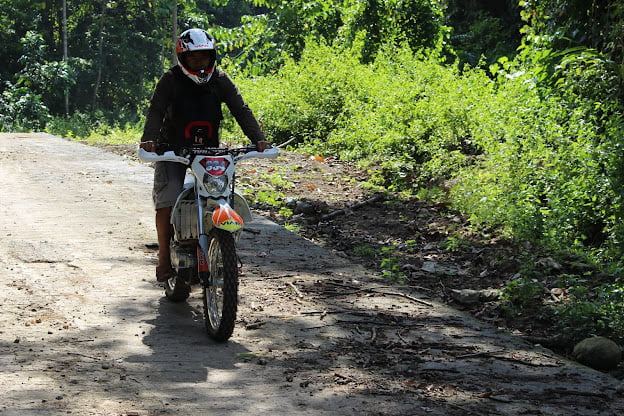
The steep inclines and sharp turns, along with the scattered rock fragments on the road, present a unique challenge. If visitors misuse the throttle or brakes on their motorcycles or cars, they will likely have difficulty continuing their journey. They may be thrown back to the bottom of the incline or stopped mid-climb. The atmosphere can be drastically different if the weather is unfavorable or it rains. This uphill climb is a battle of guts and courage.
As I described at the beginning, Bolivia's dead roads offer little insight; the mere image is enough to make you cringe. Even the ropes are a nightmare for anyone inexperienced in navigating steep slopes. My message is: these climbs are challenging enough if you don't fight them. So, muster the courage to challenge them.

Keep focus on one point
Pruak Gintung
The similarities between the Treng Tali and the Pruak Gintung are that both test the courage and mental fortitude of riders and visitors to conquer this formidable climb. If visitors are asked to choose between the Pruak Gintung and Treng Tali, then it is not a choice but a trap, like the case of the capital city that was rampant in 2017: "choose a Muslim but corrupt leader or an infidel but just leader." This is clearly not a choice but a trap for Muslims. This statement is misleading in the context of leadership. The truth is that we have a just, honest, and incorrupt Muslim leader.
The best option between these two slopes is for visitors to quickly overcome this extraordinary obstacle. The Gintung slope is no less steep than the rope slope. However, the Gintung slope has undergone some improvements, such as a solid cement cast. This cement cast is intended to help visitors or riders more easily navigate the puddles in the middle of the climb. Slippery, muddy ground marks the beginning and end of the Gintung slope. So be careful when your vehicle's wheels sink into the mud, as this will make it difficult to move. Be prepared to take a deep breath, as this is a sign that the journey needs a short rest. The message from the Gintung slope is to maintain balance, maintain a strong mental attitude, and stay focused.
Signal Break
Results will not betray effort. This expression echoes the Islamic boarding school adage "Man jadda wajada"—whoever is serious will succeed. Therefore, this signal sound is proof of the riders' and visitors' commitment. After navigating four different levels of challenge, you will soon reach the summit of a beautiful, surreal landscape. A beautiful scene that will demand your mind's desire to remember it forever.
Finally, a signal will greet you with a smile. Don't rush to continue your journey, as you'll arrive at Rarak village in just a few meters. To relieve fatigue, after conquering the signal, try relaxing for a moment by stretching your body on a bamboo platform. Park your motorcycle or car for a moment and turn around, and you'll immediately behold the beauty of nature. The enchanting scenery is like a painting atop the white mist that shrouds this village. Surely, riders can't resist capturing this moment in the village, reflecting this true-to-life scene. Grab your camera and enjoy this beautiful panorama.
According to the latest information, Rarak Village has been officially inaugurated as the second tourist village in Taliwang, West Sumabawa Regency, after Mantar became the first tourist village in terms of pioneering tourist villages on Sumbawa Island.
[1] Please stop by [2] Please stop by here for a moment



1 comment