
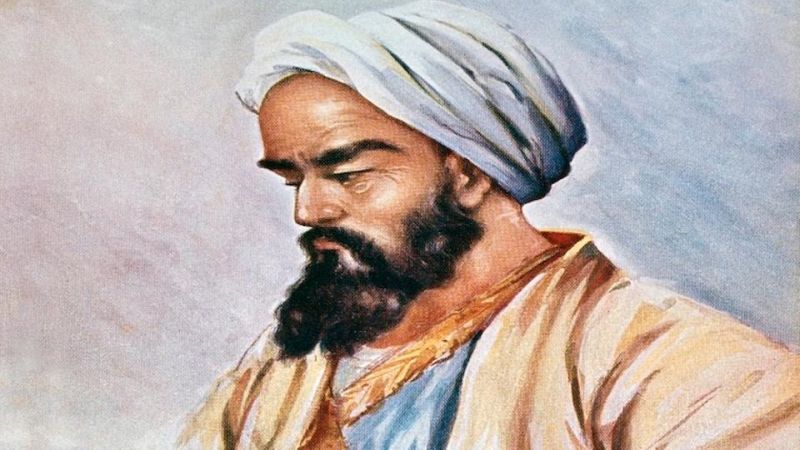
The Qur'an is a source of science and knowledge. The Qur'an has also opened the world's horizons regarding science which was then researched by friends and inspired Muslim scholars during the glory days of Islam.
Take Jabir Ibn Hayyan al-Kufi (738-813), a scientist from Kufa known for his alchemy (chemistry), whose research has become almost an encyclopedia of science and provides a summary of chemistry at that time.
Jabir has introduced the practical benefits of chemistry for cleaning iron from solution, dyeing cloth and leather, using varnish oil as a water-repellent agent for cloth, using manganese dioxide to color glass and distilling vinegar into concentrated acetic acid.[1]
As is known, chemistry is a scientific discipline that was not discovered before the arrival of Islam. The Greeks understood the elements (elements) but they did not know anything about materials such as alcohol, sulfuric acid (H2SO4), nitric acid (HNO), mercuric chloride (HgC12) and the preparation of mercury has been reported for the first time by Islamic chemists. [2]
An American scholar Haider Bammate once said; "The fundamental process in chemistry, distillation, was an invention of the Muslims, and they were the first to use it. Therefore, we must acknowledge that the contribution of Muslims to science is truly undeniable."[3]
The Muslim scientist Muhammad Abu Bakr al-Razi (865-925 CE), better known as al-Razi, was renowned for his chemical medicine. Al-Razi was a pioneer of modern chemistry. He created equipment and detailed records of more than twenty metal and glass instruments. He proposed that the balance of disease was due to chemical reactions within the body. [4]
Al-Razi divided chemicals into smaller types. Metals were divided into souls, bodies, stones, vitriol, borax, and salts. Volatile substances were separated from non-volatile ones.[5] There are many more prominent Muslim experts and scientists whose work would not be fully covered in this paper.
There is ample evidence that Muslim scientists have made significant contributions to modern scientific civilization. This is not only acknowledged by Muslims, but also by non-Muslim figures and scientists who acknowledge the superiority of Muslim scientists. Professor Salim TS Al-Hasani in the introduction to the book 1001 Inventions of Muslim Heritage in Our World quoting an Orientalist, says it this way;
"...If there is much misunderstanding in the West about the nature of Islam, there is also much ignorance about the debt our culture and civilization owes to the Islamic world. It is a failure, which stems, I think, from the straight-jacket of history, which we have inherited.
The medieval Islamic world, from central Asia to the shore of the Atlantic, was a world where scholars and men of learning flourished. But because we have tended to see Islam as the enemy of the west. as an alliance culture, society, and system of belief, we have tended to ignore or erase its great relevance to our own history..."[6]
If there is much misunderstanding in the West about the nature of Islam, there is also much ignorance about the debt our culture and civilization owes to the Islamic world, this is a failure, which I think stems from the direct history that we inherited.
The medieval Islamic world, from Central Asia to the Atlantic coast, was a world where science and learning flourished. But because we tend to view Islam as the enemy of the West, as a foreign culture and belief system, we tend to ignore or dismiss its profound relevance to our own history.
This recognition is proof that Islamic science has made a significant contribution to human civilization. While this statement holds some truth, modern scientists still cannot escape the damage they have caused to the science they developed. Confrontation between Muslim and modern scientists is certainly inevitable, even to this day.
And Allah knows best
Photo source: Google.com
[1] Muhammad A. Rahman Khan, Muslim Contribution to Science and Culture, 1973, 66.
[2] Sulaiman Nordin, Science According to….. 91
[3] Haider Bammate, Muslim Contribution to Civilization, (Brentwood: American Trust Publication, 1962)_
[4] Islamic and Arabic Contribution to the European Renaissance  (Arab Republic of Egypt: National Commission for Unesco, 1977), 191
[5] Oemar Amin Hoesin, Islamic Culture (Jakarta: Bulan Bintang, 1964)_
[6] Salim TS Al-Hassani, Elizabeth Woodcock & Rabah Saoud, 1001 Inventions Muslim Heritage in Our World, (Manchester: The Foundation for Science, Technology and Civilization FSTC, 2007), 7

1 comment
It's fascinating to see how Muslim scientists like Jabir Ibn Hayyan and Al-Razi have made significant contributions to the world of science. Do you think their discoveries are still relevant in the development of modern science today?