
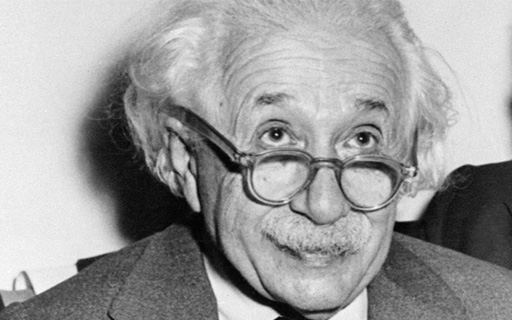
In 1940 Professor Albert Einstein published a short paper in a journal entitled 'Science and Religion'. The journal was originally taken from a conference on science, philosophy and religion held by Jewish Theological Seminary in New York, America. Starting with a simple statement about science, Einstein then gave a definition of science;
“…science is the century-old attempt to bring together by means of systematic thought the perceptible phenomena of this world into as thorough-going an association as possible…it is the attempt at the posterior reconstruction of existence by process of conceptualization…” 1
In essence, science is a systematic phenomenon resulting from efforts to improve existence by regenerating it through a process of conceptualization. For Einstein, the answer to the definition of science seemed philosophical, and for him, it wasn't too difficult.
What is noteworthy is that when Einstein tried to provide an answer to a question related to 'religion' he answered 'I cannot think of the answer so easily'. It was as if he was saying, "Don't ask about religious matters, because it's not easy for me to answer them."
It's interesting to examine Einstein's response to a religious question that he found difficult to answer. On one hand, Einstein struggled to find the most rational answer. Yet, on the other hand, he could easily answer the question, as he famously said:
"Science without religion is lame, religion without science is blind" Science without religion is lame, religion without science is blind. Later in his writings, Einstein stated that the conflict between science and religion, in Einstein's view, was not yet certain. Though I have asserted that in truth a legitimate conflict between religion and science cannot exist. 2
In contrast to Einstein's narrative above, if previously the foundation of modern science was based on rationality, on the other hand the view of science in Islam is based on the original source of revelation in the form of religion (Islam) which is then clarified by the guidance of the holy book (the Qur'an).
This was then studied by Muslim scholars, resulting in seminal concepts (core, key concepts) that would later become the foundations of several scientific concepts. From these seminal concepts, new branches of knowledge emerged, including science, aqidah (belief), fiqh (Islamic jurisprudence), hadith (traditional Islamic law), tafsir (interpretation of the faith), literature, economics, and many others.
Looking back to the Middle Ages, the word 'science' was still used generally for all branches of knowledge. Syamsuddin Arif stated that in the Middle Ages, the term 'science' was used to encompass all forms of knowledge. Therefore, the translation of Ibn Sina's metaphysical text, entitled divine (Divine Problems) is translated into Latin as Scientia Divina (Divine Science). 3
However, as time passed, the term science became narrower (reduced) to only physics, biology, chemistry, and other disciplines. This was due to the impact of modern or contemporary science, which attempted to erase traces of the past. religion in science which has been widely developed recently.
If it is related to the development of modern science in contemporary times, the emergence of new theories about science does not necessarily make religion the main basis. Religion is still seen as worldly (supernatural) is different and difficult if it has to be compared with empirical evidence.
Wallau 'alam bisshowâb
[1] Albert Einstein, Science and Religion, Journal of Nature, (No. 3706, Nov. 9, 1940), p. 605-606
[2] Ibid, p. 606
[3] Read, Syamsuddin Arif, Science Lifted and Blasphemed, p. 131

1 comment