
Education in Islam is an essential and inseparable aspect of a Muslim's life. Education aims not only to increase knowledge but also to develop good character and morals.
Islam views knowledge as one of the primary paths to drawing closer to God and improving the world's conditions. In Islam, seeking knowledge is obligatory for every Muslim, both male and female, and this is affirmed in numerous verses of the Quran and the hadith of the Prophet Muhammad (peace be upon him).
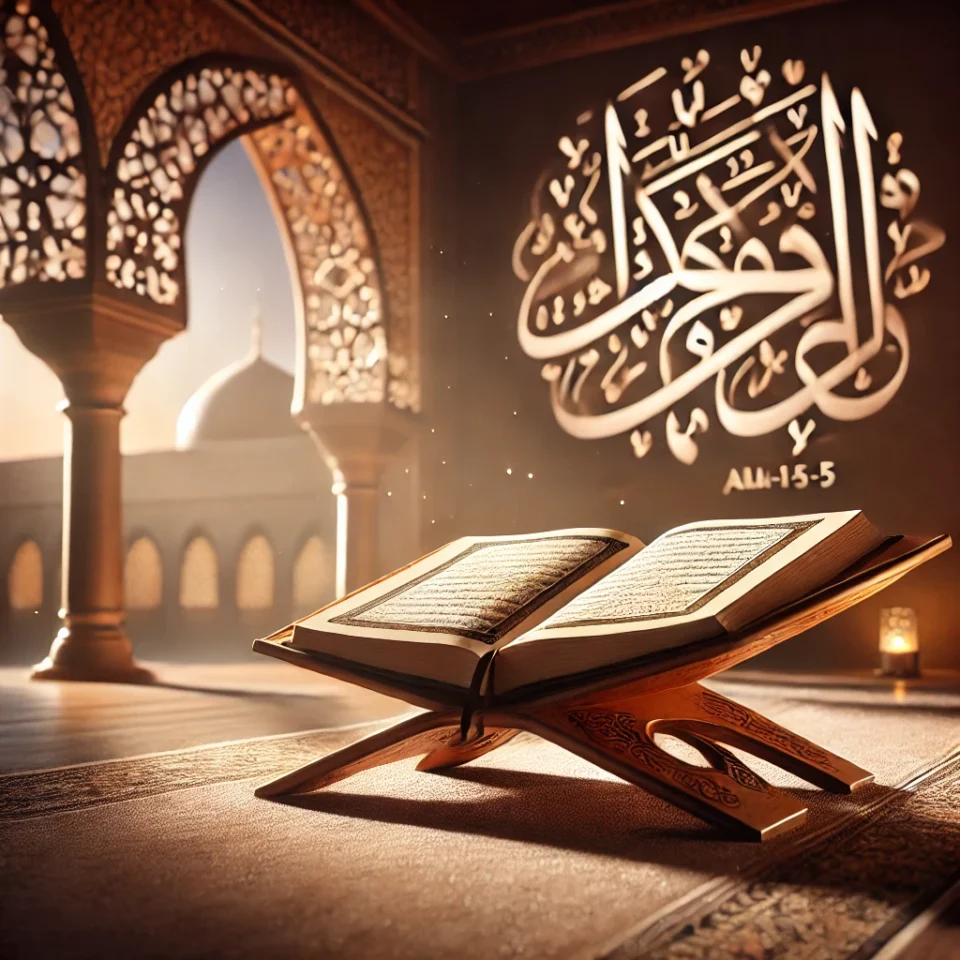
One of the arguments that shows the importance of education in Islam is the word of Allah in the letter Al-'Alaq verses 1-5, where the command to read and study is clearly stated:
God willing God bless you God willing God willing
"Read by (mentioning) the name of your Lord who created. He has created humans from a clot of blood. Read, and your Lord is the Most Gracious, who teaches (humans) by means of kalam. He teaches humans what they do not know." (QS. Al-'Alaq: 1-5). (QS. Al-'Alaq: 1-5).
This verse contains a fundamental command for humans to learn and seek knowledge. Allah SWT states that He teaches humans through the pen, demonstrating the importance of reading and writing as the primary means of acquiring knowledge.
By reading, writing, and studying, a Muslim can deepen his understanding of life and carry out the commands of Allah SWT better.
Throughout Islamic history, we see the deep focus of scholars on knowledge. Many Muslim figures of the past mastered not only religious knowledge but also other disciplines such as medicine, mathematics, astronomy, and philosophy.
They contributed significantly to the development of world civilization by using education as a tool to improve people's lives. These examples are clear evidence that seeking knowledge is highly valued in Islam.
Education in Islam is not limited to a single type of knowledge. Islam encourages its followers to seek beneficial knowledge, both religious and worldly. The knowledge learned should be beneficial, both for oneself and for others. The Prophet Muhammad (peace be upon him) once said,;
“Whoever follows a path in search of knowledge, Allah will make easy for him the path to Paradise.” (Narrated by Muslim). This hadith shows that seeking knowledge is not only valued in this world, but also serves as a path for a Muslim to attain glory in the afterlife.
Apart from that, education in Islam also places great emphasis on the formation of morals. Knowledge without morals will not bring perfect benefits. On the other hand, someone who is knowledgeable and has noble character will be an example for others and bring goodness to society.
In another hadith, Rasulullah SAW said, "The best of you are those who study the Koran and teach it."“ (HR. Bukhari). This hadith emphasizes that beneficial knowledge is knowledge that is learned and taught to others.
By understanding the importance of education in Islam, we as Muslims need to make the pursuit of knowledge a part of our daily lives, not only to achieve worldly success, but also to draw closer to Allah SWT.
A good education will shape a generation capable of critical thinking, noble morals, and a positive contribution to society. Therefore, every Muslim has a responsibility to continue learning and disseminating beneficial knowledge.
Seeking knowledge is worship, spreading it is charity, and practicing it is goodness that will never end.
And Allah knows best_

1 comment