
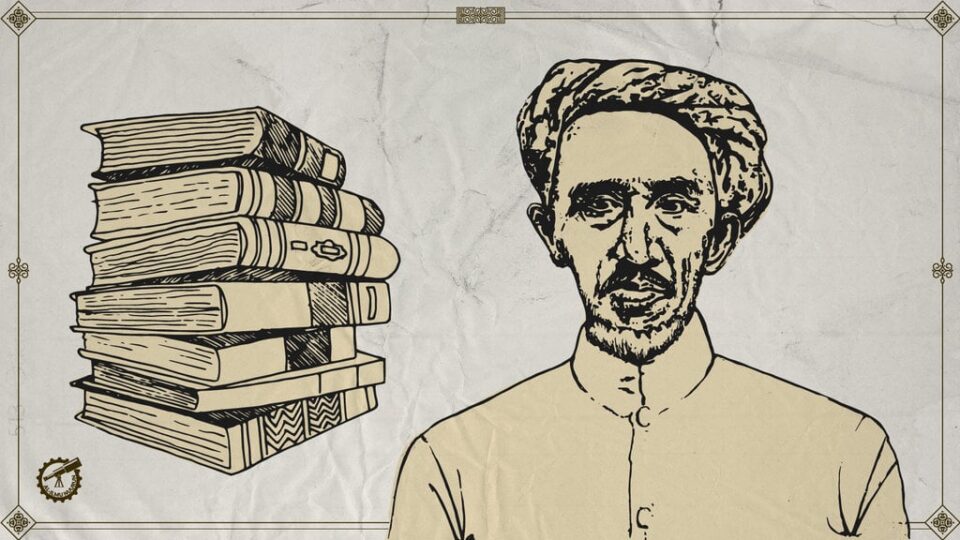
Religion is not merely repeating prayers, reciting verses, or performing rituals. In KH. Ahmad Dahlan's view, religion is an endeavor to bring Islam into every aspect of life. Islam, he argued, is not a religion that is "stiff," or rigid, tied to external forms; it is a religion that is living, dynamic, and always rational.
This belief gave birth to a major movement called Muhammadiyah, with its slogan "progressive Islam," which continues to light the beacon of renewal in Indonesia and even the world. Below, we examine some of his arguments that revitalize reason and move the mind.
First, KH. Ahmad Dahlan emphasized the importance of rationality in religion. Rationality here does not mean setting aside revelation for the sake of reason alone, but rather placing reason as a tool for understanding and experiencing revelation. KH. Ahmad Dahlan realized that without reason, the people would be trapped in stagnation, repeating meaningless rituals, and even perpetuating traditions that are inconsistent with the spirit of the Quran.
For KH. Ahmad Dahlan, revelation and reason never negate each other, but rather strengthen each other. The Qur'an addresses humans with the word “afalâ ta'qilûn” Don't you think? This rhetorical question shows that thinking is worship, and thinking is part of faith.
Second, He taught that Islam must be dynamic. The dynamism of religion does not mean changing its essence, but rather bringing to life the values contained within. Islam is not a frozen monument standing in the desert of history, but rather a constantly moving river, giving life to all who come into contact with it.
In practice, KH. Ahmad Dahlan established schools that combined religious knowledge with modern science. He knew that without knowledge, the community would continue to be marginalized. This dynamic also gave birth to Muhammadiyah's social enterprises (AUM): hospitals, orphanages, and women's empowerment through the 'Aisyiyah organization. All of these are manifestations of faith in action, not dormant faith.
Third, According to KH. Ahmad Dahlan, religion must be appropriate to the context of the times. Islamic teachings do not exist in a vacuum; they constantly encounter social realities. In his time, these realities were colonialism, poverty, and the backwardness of the people. If Islam is understood only as a ritual, the people will continue to be victims.
For this reason, KH. Ahmad Dahlan practiced contextual interpretation when teaching the letter al-ma'un, he did not stop at rote memorization, but encouraged his students to look for orphans and feed them. Tafsir is not just reading, but not only action word, but a social movement. This is Islam that is contextual, providing answers to the needs of the times, not running away from reality.
Philosophically, KH. Ahmad Dahlan's ideas can be understood as a synthesis of revelation and reality. Religion does not exist in an ivory tower separate from the world, but is present in the pulse of society. Rationality serves as a bridge between sacred texts and lived reality.
Dynamics is a way for Islamic teachings to remain relevant at all times. Context becomes the field where the seeds of these teachings are planted and allowed to flourish. Thus, religion is no longer seen as mere dogmatic repetition, but as a creative human movement to bring God into history.
This view rejects two extremes. On the one hand, it rejects a rigid religion that merely repeats meaningless traditions. On the other, it rejects a modernity devoid of spiritual values. KH. Ahmad Dahlan sought a middle ground: an Islam that is pure in faith but socially open, an Islam that returns to the Qur'an and Sunnah, but is not allergic to science and renewal.
Today, more than a hundred years after his death, KH. Ahmad Dahlan's ideas remain relevant. Our world is facing technological disruption, environmental crises, and widening socio-economic gaps.
The question is, will Muslims simply be busy debating rituals, or will they present a faith that works for humanity? KH. Ahmad Dahlan's answer is clear: religion must be rational, dynamic, and contextual. Without it, religion will be merely empty ceremony, not a light that illuminates the times.
Thus, some of the arguments from KH. Ahmad Dahlan's perspective. Bringing revelation to life in reason, moving it into action, and embedding it in social reality. That is a rational, dynamic, and contemporary religion. A timeless lesson: Islam is not just to be read, but to be lived.
And Allah knows bestâm bish shawaââb