Prologue
The Islamic Religious Extension Service (PAI) is an institution under the auspices of the Ministry of Religious Affairs of the Republic of Indonesia. One of the main duties and functions of the extension service is Carrying out an educational function. The meaning of the educational function is that the instructor is someone entrusted with educating the community in accordance with Islamic teachings.
Therefore, extension workers must be able to educate and protect community efforts to resolve any problems that arise in society, particularly the currently rampant drug epidemic. Here's a review.
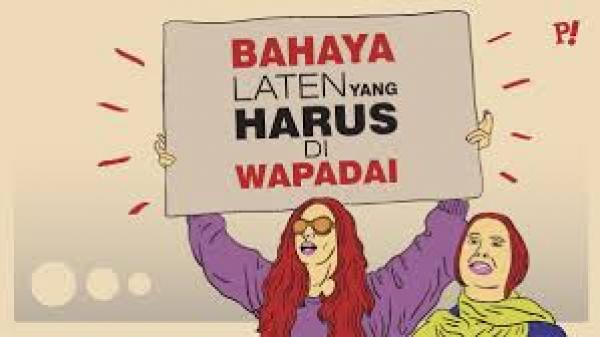
The current generation of Indonesians is faced with a serious problem: the latent danger of drugs. Narkoba is an abbreviation for narcotics, psychotropics, and illegal drugs. Besides narcotics, another term introduced specifically by the Indonesian Ministry of Health is Napza, which stands for narcotics, psychotropics, and addictive substances.[1]
The spread of drug cases around the world has not only had a global impact. In Indonesia, this case has even been declared a national emergency. The impact then spreads to the regional level, and most disturbingly, to the local level.
The phenomenon of drug abuse at the local level has attracted the attention of the local government, particularly in West Sumbawa Regency. The local government then established cooperation with relevant parties, particularly building relationships with the police, counselors, religious leaders, community leaders, educational institutions, schools, and the Regency/City National Narcotics Agency (BNNK) in eradicating narcotics. The BNNK is at the forefront of eradicating narcotics, as stated in the BNNK's vision:
To become a professional representative of the National Narcotics Agency (BNN) in West Sumbawa Regency who is able to unite and mobilize all components of society, government and private institutions in West Sumbawa Regency in implementing Prevention, Eradication of Drug Abuse and Illicit Trafficking (P4GN).[2]
The mission of the BNNK is; Together with related government agencies, the private sector and community components in the West Sumbawa Regency area in implementing prevention, community empowerment, outreach and assistance, eradication, rehabilitation and supported by accountable governance.
The main target of drugs
Looking at the widespread phenomenon in society, it's sad that schoolchildren, high school students, and university students are the primary targets of drug lords. According to UNODC data from 2022, 91 new types of narcotics have entered Indonesia out of 1,150 types distributed worldwide. Tragically, these drugs predominantly target students in educational institutions.
Various efforts to eradicate drugs have been carried out frequently, and cooperation between related parties is always involved, but there is still little possibility to prevent the latent dangers of drugs, especially among teenagers and adults. Even elementary and middle school-aged children are often caught up in drug abuse. Children Teenagers and adults who are indicated as users must be rehabilitated from the latent dangers of drugs.
To date, the most effective effort to prevent drug abuse in children is family education. Parents are expected to supervise and educate their children to always stay away from the misuse of these illicit pills.
Free association is a risk factor during adolescence. This is because adolescence is a transitional period, a phase of development from childhood to adulthood. The main problem adolescents face in general is (caper) Searching for identity. During this period, they tend to experience an identity crisis because fitting into the adult community requires a process of being perceived as established.
In reality, they are vulnerable to engaging in psychologically harmful activities. This is a problem for every teenager. Therefore, they often feel compelled to portray themselves as adults and refuse to be seen as children who are intensely seeking an education.[3]
The Importance of Religious Education in the Family Environment
In the Qur'an, Al-Baqarah verse 195, Allah SWT says:
Ÿ وَلَا تُلْقُوا۟ بِأَيْدِيكُمْ إِلَى ٱلتَّهْلُكَةِ ۛ وَأَحْسِنُوٓا۟ ۛ إِنَِ
“And do not throw yourselves into destruction, and do good, for Allah loves those who do good.”
Consuming drugs falls into the category of people who are doomed to destruction. Destruction here, of course, is not just in the context of something visible. (born) For example, the impact of drugs can cause loss of awareness of rational function, bad personality, frustration, despair, to the point of destroying and falling apart one's life, and even leading to economic ruin in the family.
Religious education within the family is the most important bulwark and shield against drug use in children. Parents play a crucial role in educating their children so that their hearts and behaviors grow from a foundation of faith and are instilled in religious values. In Islam, children, in particular, must be given a sound understanding of illegal drugs (haram), including their inherent dangers. Parents must continue to instill faith in their children so that they grow up with a sound mentality and positive social interactions.
Regarding this, Rasulullah Saw said:
“Do not endanger yourself or others” (HR. Ibn Majah no. 2340).
This hadith reinforces the above verse. It states that harming others is forbidden, let alone harming oneself. Drugs, of course, not only harm oneself but also others.
Therefore, Allah's warning to those who consume forbidden goods is very strong. For example; alcoholic drinks (alcohol), Gambling and similar acts are likened to the actions of Satan, while Satan is the worst example, as an enemy to believers.
In the Qur'an, Al-Maidah verse 90, Allah SWT says:
يَٰٓأَيُّهَا ٱلَّذِينَ ءَامَنُوٓا۟ إِنَّمَا ٱلْخَمْرُ وَٱلْمَيْسِرُ وَٱلْأَنصَابُ وَٱلْأَزْلَٰمُ رِجْسٌ مِّنْ عَمَلِ ٱلشَّيْطَٰنِ فَٱجْتَنِبُوهُ لَعَلَّكُمْ تُفْلِحُونَ
O you who believe, indeed (drinking) wine, gambling, (sacrificing to) idols, drawing lots of fortunes with arrows, are among the actions of the devil. So stay away from those actions so that you will get good luck.[4
Epilogue
Thus, the fight against the latent danger of drugs must be intensified. Of course, we cannot do it alone; it requires cooperation from the central, provincial, regional, and village governments. The latent danger of drugs must be addressed.
can be prevented as early as possible. So that our children, the next generation, will not fall into the dark trap of drugs. If not now, when? If not us, who? War on Drugs
[1] See, https://id.wikipedia.org/wiki/Narkoba
[2] Read, https://sumbawabaratkab.bnn.go.id/visi-dan-misi-bnn/
[3] Read, https://kepri.bnn.go.id/penyalahgunaan-narkoba-kalangan-mahasiswa-pelajar/
[4] Al Azlaam means: an arrow without feathers. The Jahiliyah Arabs used arrows that had no feathers to determine whether they would do something or not. The method is: they take three arrows that don't have feathers. after each one was written, namely: do it, don't do it, while the third one was not written down, it was put in a place and kept in the Kaaba. If they wanted to do something, they asked the caretaker of the Kaaba to take an arrow. It's up to them whether they will do or not do something, according to the writing on the arrow they took. If an arrow is drawn that has no writing on it, then the draw is repeated once again.

1 comment