
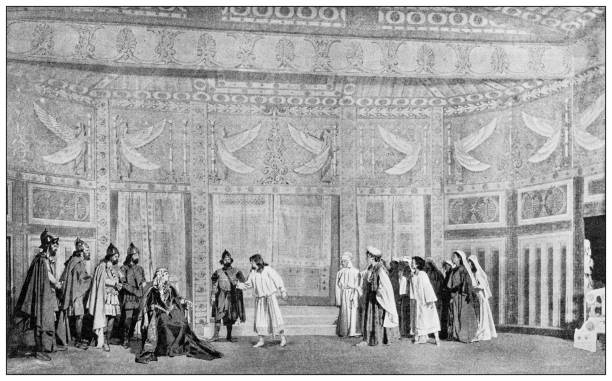
“"The emergence of orientalists and their orientalism movement has made Muslims aware of the need to strengthen their belief in the truth of Islam with the guidance of miracle The Messenger of Allah, namely Al-Qur'an And sunnah he is al-Hadith“"“
The discourse on Orientalism has almost never faded from the realm of thought. Although its study has become less lively than it once was, for at least a decade, the discourse on Orientalism has continued to attract attention from various parties, including intellectuals, academics, and conservative thinkers.
Discussions on Orientalism are quite diverse. From intellectuals to scholars and academics, they are trying to discern the true identity of Orientalism. Their studies and analyses focus not only on the expository (external) level but also on its core elements. esoteric (in).
Meanwhile, studies of Orientalism at the conservative level of understanding still revolve around simple rhetoric, basically not wanting to delve too deeply into the issues or discourse referred to as Orientalism.
However, the emergence of orientalists with their orientalism movement has made Muslims aware of the need to further strengthen their belief in the truth of Islam with guidance. mu'jizât The Messenger of Allah, namely Al-Qur'an and his sunnah, namely al-Hadith.
These two sources are the primary targets of Orientalist proponents, who distort, criticize, interpolate, and even deconstruct the history and sacredness of both the Quran and the Hadith. As a result, information about the truth of Islam in general becomes skeptical, full of confusion and confusion. This confusion and confusion regarding truth are the core objectives of Orientalist studies.
The target is clear: the Eastern world, which is essentially Islam. This article attempts to examine the epistemology of Orientalism, aimed at attacking Eastern identity, represented by Islam and Christianity as representations of Western culture. Using descriptive analysis, it can then present the study from a research perspective.
Some Definitions of Orientalism
Etymologically, the term 'orientalism' comes from French, namely "orient" which means East or is a study of Islam in the East. Temporary “ism” refers to the meaning of understanding, teachings and ideology.
According to Encyclopedia of Islam, orientalism the study of the East (“the Orient”) especially the “Islamic East,” by European and American scholars during 19th and 20th centuries.[1] This definition emphasizes the true meaning of orientalism which refers to the study of Islam in the East which was carried out since the 19th and 20th centuries.
The actors in this study are called orientalist or 'student of eastern culture. Analytically, according to Encyclopedia of Islam, this eastern study is divided into three views. First, expertise in controlling the Eastern region. Second, methodology in studying eastern problems. Third, ideological attitudes towards the East, especially towards the Islamic world.[2]
In the book 'Ru'yah Islamiyyâh lil Istisyrâq' Dr. Ahmad Abdul Hamid Ghurab defines Orientalism in general and specifically. Generally, it is Western-style thinking as the basis for assessing and treating Eastern nations, stating that there are fundamental differences between the West and the East, both in terms of existence, science, and technology.
According to Dr. Ghurab, the advantage of this definition is that it is a sign of bigotry towards race which is very prominent in the world of industrialism, in all its varieties. Be it originalism in the academic sphere, work, or the scientific papers they write about the Eastern world.[3]
As for the specific understanding of Orientalism, it is an academic study conducted by Western nations from imperialist countries regarding the Eastern world in all its aspects, including history, knowledge, language, religion, socio-political order, natural resources and all its potential.
This stems from the Western belief that Western race and civilization are superior and more advanced than Eastern nations. This issue can certainly be interpreted as a goal of dominating Eastern nations for the benefit of the West.
The activities carried out are carried out with deception to make it appear that the studies they are conducting are scientific and objective.[4] By referring to the general and specific understanding above, it can be understood that Orientalism is an idea or ideology that was deliberately formed in the interests of Western nations to dominate and control the East in all possible aspects.
Meanwhile, Richard King defines Orientalism differently: someone who teaches, researches, and writes about the East. In other words, an Orientalist considers himself to have a set of skills in understanding Eastern cultures.[5] King's understanding can be said to be the same as the meaning in the previous definition. According to Edward W. Said, it is interpreted as;
“Orientalism is a style of thought based upon an ontological and epistemological distinction made between “the Orient” and (most of the time “the Occident.”[6]
The definition given by Edward Said does indeed seem philosophical, but it can be interpreted that orientalism is actually an idea or understanding initiated by Western orientalists in order to change style of thought the way of thinking, the way of looking at things of the East is like that of the West both in essence and in science.
What is a Western perspective or way of thinking? It's important to analyze that a person's thoughts determine their attitudes and behavior. Their attitudes and behavior are a reflection of morals that affirm what they believe.
If one believes in the sources of information developed, researched, and analyzed about the East by Westerners, there's no doubt that such thoughts are truths that must be believed. Even if the belief in such analysis isn't entirely correct.
Then the mission style of thought continuously echoed by the West until Muslim attitudes change in line with what the West wants. Therefore, Edward Said concluded "in short, orientalism as a Western style for dominating, restructuring, and having authority over the Orient."[7] In essence, orientalism is intended for Muslims to act westernized.[8]
Muslim scholar Hamid Fahmy Zarkasyi defines Orientalism as a Western perspective on non-Western nations. Non-Western nations, namely those of the Middle East and Asia, are viewed through a racial lens and with suspicion.[9]
According to the analysis of Islamic philosophy expert Prof. Hamid Fahmy Zarkasyi, the Orientalist movement is one of three major agents of liberalization of Islamic thought propagated by the Western world: missionaries, orientalists, and colonialists.
For this reason, the West then developed a strategy which then made Eastern nations the object of study under the pretext of 'helping' formulate concepts of culture, history and religions of the Eastern world.
However, studies of culture, history, religion and so on are read from a 'typical' Western perspective which is not actually a scientific study as perceived, but is for the benefit of and is used as a Christian missionary and for Western colonialism and imperialism.[10]
From the various definitions provided, we can conclude that Orientalism is a Western concept, concept, and perspective on studying the Eastern world. These ideas and perspectives are packaged in a seemingly objective scientific study, but are instead a deceptive movement designed to alter culture, history, and religion to facilitate the movement.
[1] Juan E. Campo, Encyclopedia of Islam, (New York: Library of Congress, 2009), 536. See 'orientalism'
[2] Encyclopedia of Islam Volume 4, (Jakarta: Ichtiar Baru Van Hoeve, 1994), p. 55. Read, full review, Ridho Al-Hamdi, Occidentalism Epistemology: Debunking the Myth of Western Superiority, Building Equality of Civilizations, (Yogyakarta: Blue Ocean, 2019), 56
[4] Ibid. 18
[3] Ahmad Abdul Hamid Ghurab, Ru'yah Islamiyyah Lil Istisyrâq' Translated by AM Basalamah, Unveiling the Veil of Orientalism, (Jakarta: Al-Kautsar Library, 1992), 17
[5] Richard King, Religion, Orientalism and Psycho-Colonialism, Ter. Agung Prihantoro, (Yogyakarta: Qolam, 2001), 162
[6] Mustofa Bayoumi and Andrew Rubin, The Edward Said Reader, (New York: Vintage Books, 2000), 69
[7] Ibid, 69.
[8] Read more, Mustofa Maufur, Orientalism: Ideological and Intellectual Invasion, (Jakarta: Pustaka al-Kautsar, 1995), 17
[9] Hamid Fahmy Zarkasyi, Liberalization of Islamic Thought: A Joint Movement of Missionaries, Orientalists and Colonialists, (Ponorogo: Center for Islamic and Occidental Studies, CIOS, 2008), 61
[10] Ibid, 62.
For more details, please read, Edward W. Said, Orientalism, (New York: Vintage Books, 1978), 1-2. Edward W. Said clearly explains that orientalism is an agent of Western colonialism and imperialism; "In addition, the orient has helped to define Europe (or West) as its contrasting image, idea, personality, experience. Orientalism expresses and represents that part culturally and even ideologically as a mode of discourse with supporting institutions, vocabulary, scholarship, imagery, doctrine, even colonial bureaucracies and colonial style."

1 comment