
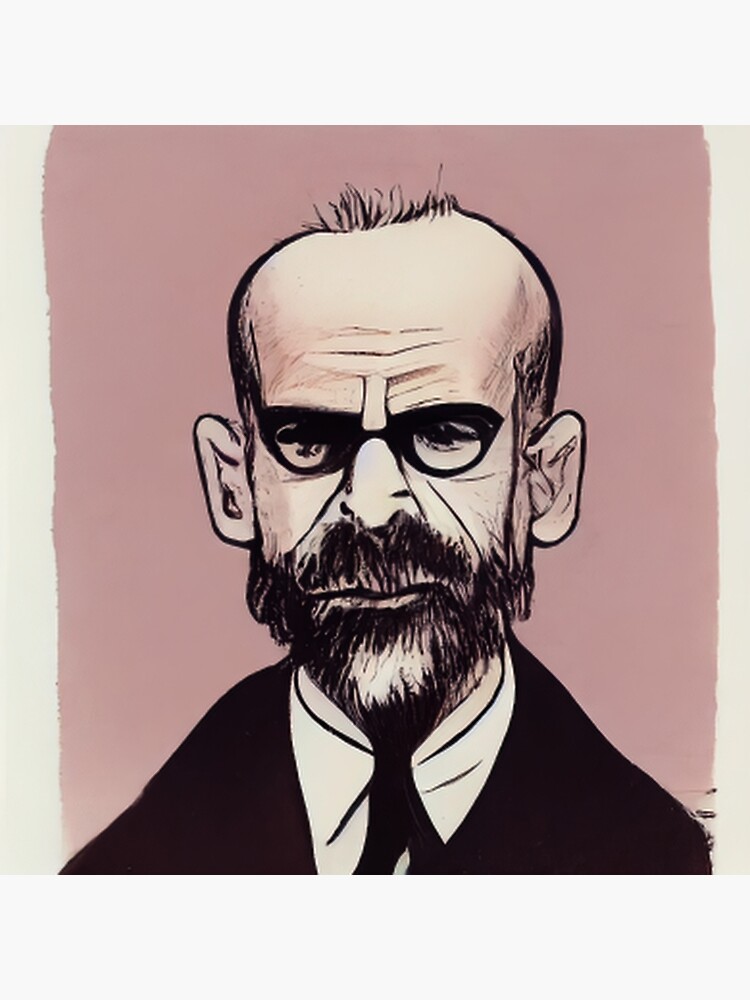
Introduction to Émile Durkheim's Theory
Émile Durkheim was a key figure in the world of sociology, whose birth in France in 1858 marked the beginning of a long career filled with significant contributions to our understanding of social phenomena. A leading sociologist, Durkheim was known for his scientific and empirical approach to the study of society and religion. He viewed society as a reality sui generis, have an existence and structure that can be analyzed separately from the individuals within it.
One of Durkheim's major contributions was his attempt to explain how societies create and maintain social solidarity through various institutions, including religion. In his most influential work, 'The Elementary Forms of Religious Life'.
Durkheim examined various forms of primordial religion to understand its essence and function in society. He believed that religion was not only a belief system related to the supernatural, but also a vital mechanism for building collective identity and maintaining social integration.
In this book, Durkheim examines the totemic societies of Australian Aborigines as a case study. He argued that totemic religion was an early form of more complex religion. He argued that totems were used as sacred symbols representing both the gods and the society itself.
This is important because through totem worship, community members help strengthen their collective bonds and reinforce group identity. Thus, totem religion becomes an important means of maintaining social cohesion and community integrity.
Durkheim's thinking on totemic religion has not only influenced the study of religion but has also become the basis for various sociological theories that attempt to understand the role of religion in social structure and social processes. Combining scientific methods with empirical observation, Durkheim successfully provided insight into the social function of religious practice and its importance in maintaining social order.
Basic Understanding of Totem Religion
According to Émile Durkheim, one of the leading sociologists, totemic religion played a crucial role in the lives of primitive societies. Totemism is a belief that attributes spiritual meaning to certain natural objects, usually animals or plants, which then become important symbols for a social group. These totems are considered representations of ancestral spirits and have profound value in supporting the social structure and culture of the group.
Durkheim observed that in primitive societies, totems were not only symbols of belief but also pillars for building group solidarity. Each social group or clan had a unique totem that served as its identity and bound its members together through religious ceremonies and rituals.
For example, in Aboriginal tribes in Australia, totems such as kangaroos or echidnas are used in various ceremonies to strengthen social bonds and celebrate important events in their lives.
In everyday life, totemism also serves to regulate the relationship between humans and their natural environment. Communities that adhere to totemism often have specific rules regarding how to treat their totem animals or plants. This not only fosters respect for and protection of nature but also strengthens the group's collective identity.
The symbolic importance of totems in social structure cannot be ignored. Durkheim emphasized that totemism is an early form of a more complex, community-oriented religionBy understanding the basic concepts of totemic religion, we can better appreciate its important role in the evolution of belief and how it shaped social dynamics in primitive communities.
Durkheim's Analysis of the Social Function of Totemic Religion
Émile Durkheim, a prominent sociologist, thoroughly analyzed the social function of totemic religion in the communities he studied. Durkheim viewed totemic religion as an essential mechanism for strengthening social bonds within social groups.
In his perspective, totemic religion is more than just a belief system; it is an important tool for maintaining solidarity and kinship among its members. Through totem-related rituals and ceremonies, members of a community not only engage in acts of worship but also in communal experiences that enhance their social bonds.
One of the main theories proposed by Durkheim is the concept 'collective effervescence' or shared passion. This term refers to the strong energy and sense of togetherness that emerges during group religious practices. During religious ceremonies, individuals experience a sense of connection that deepens their sense of identification with the group.
This phenomenon helps strengthen a sense of unity and create a strong collective identity. This process not only strengthens the social structure but also affirms and solidifies the norms and values held by the community.
Apart from its collective function, totem religion also provides symbolic legitimacy to social norms and values in society. Totems were considered sacred and represented greater forces that governed social life. Thus, the rules contained in totemic religion become not only social norms but also moral obligations. Totemic religion functions to integrate individuals within a uniform moral framework, strengthen social unity, and reduce internal conflict.
In other words, Durkheim saw totemic religion as a crucial instrument in achieving comprehensive social integration. Through ceremonies and rituals, communities found a collective spirit that encouraged them to work together to maintain social order and strengthen internal kinship.
Criticism and Rebuttal of Durkheim's Theory
Émile Durkheim's thoughts on totemic religion have drawn a variety of criticisms from various academic and intellectual circles. One of the main criticisms is the view that Durkheim oversimplifies the complexity of religion.
Durkheim proposed that totemic religion was the most basic form of religious life, which in turn formed the basis for more complex religions. However, this criticism rested on the argument that this thinking ignored the diversity and depth of religious experience, which cannot always be summarized in universally accepted principles.
Furthermore, some critics have pointed out that Durkheim's totemic theory of religion tends to neglect the personal aspects of religious belief. By emphasizing the social structure and collective function of religion, Durkheim is considered to downplay the individual dimensions of religious experience, such as personal spirituality and an intimate relationship with the sacred. This view is considered less grounded, especially in the context of religions that place a strong emphasis on subjectivity and individual experience.
One of the Muslim thinkers, scholars, and researchers from Egypt who was very active in criticizing Durkheim's theory was Haitsam Thala'at Ali Surur. In his book Rasul al-Ummiyiin: Evidence of the Prophet's Prophecies and the Truth of IslamHe is an expert on atheism, secularization and the authenticity of Islamic law.
In the book, he states, "Durkheim played a major role in misleading European science, particularly when he introduced the concept of celebrating primitive tribes." This fact is one of Durkheim's most prominent forms of misconception.“"“
Andrew Lang, also in his book The Making of Religion (1968) also stated that the theory of 'totem religion' was not 'known' to the inhabitants of nations, civilizations, or even continents about this theory and doctrine. This means that Durkheim's theory has so far succeeded in claiming victims, especially European nations who are always interested in empirical findings.
Therefore, this kind of theory is often used as bait to undermine Muslim beliefs. This is because theories that are usually accepted by the West and Europe are often adopted by other countries, nations, and even religions to affirm their truth. Therefore, the purity of the teachings must be maintained. creed by implementing the Shari'ah and morals.
And Allah knows best

1 comment