
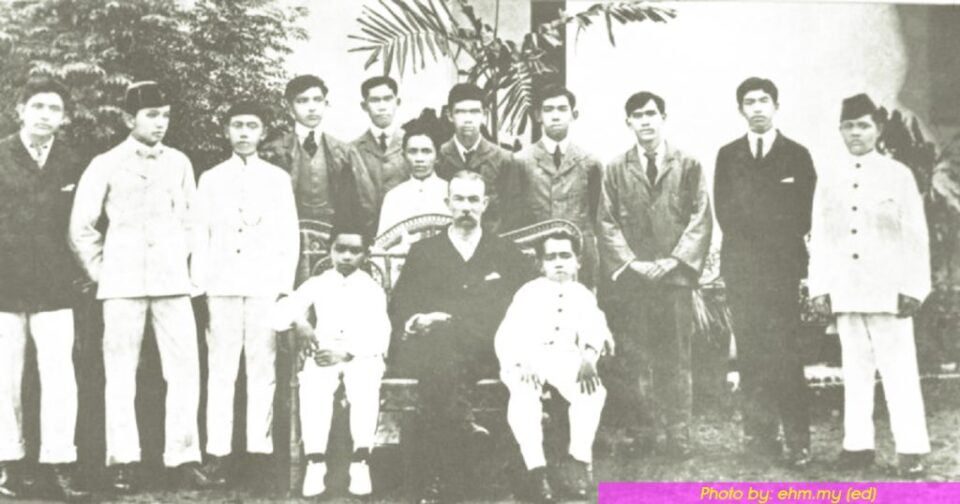
From a historical perspective, the origins of Indonesia's educational problems can be seen here, beginning with the arrival of Dutch colonialism around 1882. Since then, the Indonesian education system and learning orientation have experienced serious problems. As a result, the educational system has been under the shackles and complete control of colonialism, resulting in a secularized education system that has eroded religious and national values.
In this regard, in a historical study conducted by Elizabeth H. Graves, as quoted by Azyumardi Azra, regarding the transitions that occurred in the world of education, including Islamic education in West Sumatra, after the Dutch established 'people's schools' (people's schools) which is popularly known as "nagari school" in various places in Minangkabau. Initially, most of these nagari schools used the surau 'curriculum'.
However, as it developed, the curriculum adopted the Dutch education system, which began to instill a dichotomy in the educational world. The presence of these nagari schools was a major blow to surau education, which incidentally is the last bastion of Islamic education.
The dichotomy in education is the impact of the secular system introduced by the West on the education systems of Muslims. This spread after the independence of Muslim countries. Therefore, educational systems that implement secular intellectual methods have gained a central place in the national education system. Fazlur Rahman documented this issue in his book, which attempts to unravel the history of secular education that has plagued Muslim countries. He states:
".. Since the acquisition of political independence, education in these countries has basically only been a continuation of colonial education, which was essentially shown as a successor to colonial-formed government employees who would serve the interests of the colonial government. In essence, the education that was created was not based on a strong foundation, nor was it a true form of responsibility"
In a loose translation, since gaining political independence, education in these countries has essentially been a continuation of colonial education, essentially intended as a successor to colonial-formed government employees who would serve the interests of the colonial government. In essence, the education created was not based on a solid foundation, nor was it a form of true responsibility.
In keeping with the times, after Indonesia's independence in 1945, the government began designing a national education curriculum, which has undergone continuous revisions to this day. The development and implementation of curriculum policies in Indonesia tend to be politicized by those in power. With each change of power, for various reasons, curriculum policies change.
Thus, the phrase "change minister, change curriculum" has become the government's mandatory slogan. Instead of these curriculum changes advancing Indonesian education globally, they have actually reversed their purpose, leading the Indonesian people to decline, to near-inability to compete internationally. In fact, according to Anzar Abdullah, "Indonesia's education curriculum is alienated in its own country."
Curriculum issues should not be taken lightly; the government must view them as a critical issue that must be addressed immediately. If these issues persist, they will automatically impact learning in schools. Teachers and students will face challenges implementing the constantly changing curriculum. This will indirectly create new problems within educational institutions.
It's undeniable that Indonesia's educational problems are a legacy of colonial rule, deliberately attempting to undermine the education and teaching system in accordance with its stated aims and objectives. This remains a "ghost" that continues to undermine the Indonesian education system. This colonial legacy should have been revised and evaluated, as it is inconsistent with the established educational orientation and goals.
From the findings of the educational problems that have been described, the fundamental problem lies in the implementation of the curriculum which is seen as deviating from the interpretation of the national education system which aims to increase faith, piety and noble morals in order to enlighten the life of the nation.
National Education System and Law No. 12/2012 concerning Higher EducationThe goal of developing individuals who are faithful, pious, and have noble morals was reaffirmed and further detailed in the Regulation of the Minister of Education and Culture concerning Graduate Competency Standards. (Minister of Education and Culture Regulation No. 20 of 2016).
Reflecting on the reality of the curriculum and regulations in the field of education clearly emphasizes the urgency faith, piety And noble morals. It's important to remember that if this ideal formulation were implemented, the current state of education in Indonesia would not be as overlapping as it is now. Ideally, the constitutional formulation in the 1945 Constitution regarding education should have align Islam and Indonesian-ness and not create a dichotomy between Islamic education and the national education system.
However, the national education system tends to be indifferent to the Islamic education system, as a result the nation's intelligence is hampered by regulations, curriculum and implementation of education that have the wrong targets and objectives.
Hopefully, the future Indonesian Minister of Education will be better at managing our education system, particularly in curriculum development policies, from elementary, junior high, secondary, and higher education.
And Allah knows best
