
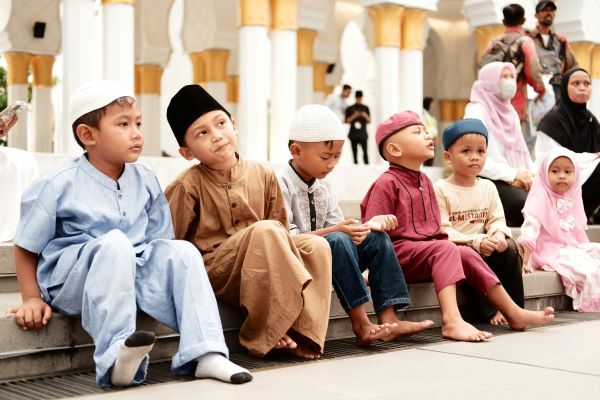
The problem of moral degradation beginning to emerge among students demands serious attention to strengthening moral education based on noble values, local culture, and religion. Moral education is a fundamental instrument in producing a generation that is not only intellectually intelligent but also possesses integrity and noble morals.
Moral education is not merely the transfer of knowledge about good and bad, but rather a process of personality formation that involves cognitive, affective, and psychomotor aspects. Lickona (1991) emphasizes that effective character education must include three The main components are moral knowledge, moral feelings, and moral actions. These three components must be comprehensively integrated into the education system to produce individuals with noble character.
The Urgency of Moral Education
West Sumbawa is a predominantly Muslim regency with a rich local culture rich in moral and ethical values. Traditions such as the Basiru which teaches about mutual support and mutual cooperation which is a valuable asset that needs to be integrated into formal education.
However, the penetration of global culture through social media and information technology has had a significant impact on the mindset and behavior of the younger generation. The phenomenon of juvenile delinquency, declining respect for parents and teachers, and the fading values of honesty are indicators of the need to revitalize moral education.
According to Berkowitz and Bier (2005), systematic and ongoing character education has been shown to be effective in reducing risky behavior in adolescents and improving academic achievement. This demonstrates that moral education not only impacts personality but also contributes to students' academic success.
Implementation of Moral Education in Schools
The implementation of moral education, especially in West Sumbawa Regency, requires a comprehensive strategy and involves various stakeholders. First, The education curriculum must integrate moral values not only in Religious Education and Pancasila subjects, but also in all subjects. This is in line with the concept of "“integrated curriculum” as put forward by Dewey, where moral education does not stand alone but is interwoven into the entire learning process.
Second, learning methods must use an approach that actively involves students. Methods such as moral dilemma discussions, role playing, and social project-based learning can enhance the internalization of moral values. Nucci (2001) showed that moral learning involving discussion and reflection is more effective than indoctrination or one-way lecture approaches.
Third, The role model of teachers and educational staff is a crucial factor. Bandura (1977), using social learning theory, explains that children learn through observation and imitation of models they admire. Therefore, teachers serve not only as instructors but also as "uswatun hasanah" or good role models for students.
The Role of Local Culture in Strengthening Moral Education
The local wisdom of the West Sumbawa community contains moral values that are highly relevant to the goals of character education. One of the local cultural traditions of Taliwang is Buffalo Barapan (Buffalo Racing). Barapan Kebo contains moral values such as; friendship among buffalo owners, discipline, courage, and sportsmanship. These values constitute social capital that must be preserved and integrated into formal education.
Apart from that, West Sumbawa has other local wisdom values, such as basiru (mutual assistance) or the culture of mutual cooperation can be a source of relevant moral values. Research shows that integrating local wisdom into learning strengthens the relevance of moral education and makes it easier for students to internalize values (Widodo, 2020).
Banks (2008) in his theory of “"multicultural education"”"emphasizes the importance of integrating local culture into the curriculum to build a strong cultural identity and foster an appreciation for diversity. Education rooted in local culture will be more meaningful and easier for students to understand because it is relevant to the context of their daily lives.
Implementation of local wisdom-based learning can be carried out through various activities, such as out-of-class learning involving community leaders, documenting folktales rich in moral values, and performing cultural rituals with educational significance. This not only strengthens students' identity as the next generation of West Sumbawa but also fosters a sense of pride in their ancestral cultural heritage.
Synergy between Family, School and Community
Moral education cannot run optimally without strong synergy between three pillars education, namely family, school, and community. Epstein (2011) developed a model “overlapping spheres of influence” which describes how these three institutions must work together synergistically to support optimal child development.
Family as madrasah First, it plays a fundamental role in instilling basic moral values from an early age. Democratic and compassionate parenting styles have been proven more effective in shaping positive character than authoritarian or permissive parenting styles. Schools then reinforce and expand the values instilled in families through structured programs.
The role of the community is equally important, especially in the context of West Sumbawa Regency, which still maintains strong communal ties. Religious leaders, traditional leaders, and youth can collaborate with schools to organize activities that support character building, such as regular religious study groups, community service, and social activities. A conducive community environment will strengthen the internalization of moral values learned at school and in the family.
Challenges and Solutions
The implementation of moral education in West Sumbawa Regency faces various challenges. First, teachers' limited understanding and competence in implementing moral education effectively. The solution is to provide ongoing training for teachers on character education methodology and innovative learning techniques.
Second, The negative influence of social media and technology can erode traditional moral values. Strong digital literacy is needed so that students can filter information and use technology wisely. Livingstone and Haddon (2009) emphasize the importance of digital literacy (digital literacy) as an integral part of moral education in the digital era.
Third, Inconsistencies between the values taught in schools and practices within families and communities. This requires a shared commitment from all stakeholders to create a conducive educational ecosystem. Programs such as "Child-Friendly Schools" and "Education-Aware Villages" can serve as models for building value consistency across diverse environments.
A Conclusion
Moral education is a crucial foundation for developing a generation with noble character in West Sumbawa Regency. Successful moral education requires a holistic approach that integrates religious values, local culture, and universal wisdom within a comprehensive education system. Synergy between families, schools, and the community is key to achieving this noble goal.
The West Sumbawa Regency Government needs to formulate strategic policies that support the strengthening of moral education, including adequate budget allocation for teacher training, curriculum development based on local wisdom, and the development of character education infrastructure. stakeholders Education must be committed to making moral education a top priority, not just an addition to the education system.
Investing in moral education today is an investment in a better future for West Sumbawa Regency. A generation of noble character produced through quality moral education will be a valuable asset in building a developed, dignified, and prosperous region.
With a strong moral foundation, the young generation of West Sumbawa will not only be able to compete in the global era, but also maintain their identity and the noble values inherited from their ancestors.
Written by: Isanul Fikri. Student Fifth Semester Student. Faculty of Teacher Training and Education. English Language Education Department. Cordova University
Reference List
Bandura, A. (1977). Social Learning Theory. Englewood Cliffs, NJ: Prentice Hall.
Banks, J.A. (2008). An Introduction to Multicultural Education (4th ed.). Boston: Allyn and Bacon.
Berkowitz, M. W., & Bier, M. C. (2005). What works in character education: A research-driven guide for educators. Washington, DC: Character Education Partnership.
Epstein, JL (2011). School, Family, and Community Partnerships: Preparing Educators and Improving Schools (2nd ed.). Boulder, CO: Westview Press.
Kohlberg, L. (1976). Moral stages and moralization: The cognitive-developmental approach. In T. Lickona (Ed.), Moral Development and Behavior: Theory, Research, and Social Issues (pp. 31-53). New York: Holt, Rinehart and Winston.
Lickona, T. (1991). Educating for Character: How Our Schools Can Teach Respect and Responsibility. New York: Bantam Books.
Livingstone, S., & Haddon, L. (2009). EU Kids Online: Final report. LSE, London: EU Kids Online.
Nucci, LP (2001). Education in the Moral Domain. Cambridge: Cambridge University Press.
Widodo, H. (2020). Character education from a national education perspective. Journal of Character Education, 10(2), 123–135.
