
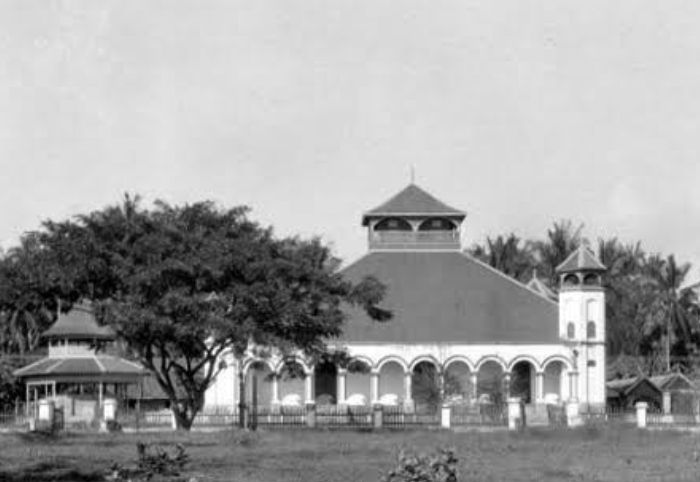
In Bima, there are three religious groups. The majority of the population is Muslim. However, in the main city, there is a small Christian community. Meanwhile, in the mountains, there are still adherents of mystical sects.
Among Christians in Bima, there are both Protestants and Catholics. They live in harmony with one another, perhaps because many of them don't particularly care about religion. Or perhaps because of their low level of education and limited interaction with the outside world, they don't know the difference between Protestants and Catholics.
This is not surprising, as pastors from the Makasar congregation (the congregation in Bima) rarely come to Bima to preach, baptize, or marry. They only stay eight days when they do. Meanwhile, Catholic priests only visit Bima on their way from Delhi and Macau, so they only perform baptisms and then leave. Consequently, Catholics in Bima do not attend church services.
A priest from Makassar also does not come every year to give catechism. He also did not do any service sacrament. All he did was read sermons and give bad religious teachings.
He came simply to praise the Bima Christians who, despite their poverty, still donate funds for aid and church construction in Makassar, both for Protestant and Catholic churches. The funds received from Bima Christians were unexpectedly substantial.
The indigenous people who adhere to Islam were once part of the mountain people: idol worshippers. However, I haven't found any traces of Hinduism, any antiquities, statues, temples, or ruins anywhere. Could names like "Dewa," "Guru," and the like refer to that? I'm not sure.
Because the word "Dewa" is also still found among the Dongo people, who are certainly not Hindu. Islam was introduced to Bima between 1540 and 1550, probably by people from Makasar. The first Muslim sultan was named Abdul Kahir.
The number of ulama in this country is very large; but they are not respected, especially by the Sultanate's officials. They often perform the Hajj pilgrimage, but not to Mecca, only as far as Singapore. They have no specific income; they live off gifts and alms.
The gifts they received were for participating in certain religious activities. Some of them had large followings and influence. This posed a threat to the Palace if their ambition for honor turned against the Sultanate's dignitaries.
Arabs are very popular in this country, but few of them live there permanently. Many of these Arab pilgrims pretend to be religious scholars and return from Bima with large sums of money collected from begging.
What's interesting to note is that interfaith relations in Bima are linked to a past contract with the VoC. Those who renounced Christianity were subject to extradition from Bima. Furthermore, Christians were prohibited from converting residents to Christianity.
And Allah knows best
1 comment
What is your view on the interfaith dynamics in Bima in 1847, which appeared harmonious despite the restrictions imposed by the authorities? Do you think similar conditions can still be found in today's society?