
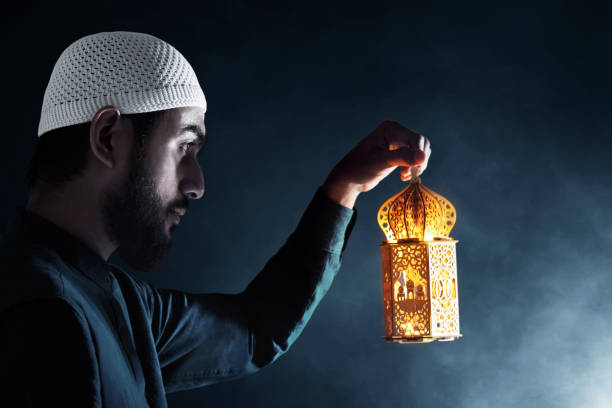
“"The Qur'an warns us: Do not be deceived! When humanity turns away from guidance, its land becomes barren, rain is withheld, crops dry up, and generations perish in a cycle of sin. Moral and ecological decay are the siblings of hypocrisy."” _ M. Syarif Hidayatullah
Since the first words were revealed in the Cave of Hira, the Quran has never tired of inviting us to read reality with the eyes of the heart. One of the most poignant reflections comes from four verses in Surah Al-Baqarah, verse 204 until 207. This series does not just tell the story of two people, but holds up a mirror to every soul who claims to be a believer.
He brings us face to face with the deadly charm of words, then leads us to the silent stage of life-giving sacrifice. How many of us still easily fall in love with the glitter of words, forgetting that behind those sparkling words can hide a dagger that tears the earth apart.
Allah opened the first portrait with His words, “"And among humans there is someone whose words about the worldly life amaze you, and he testifies to Allah what is in his heart, even though he is the strongest opponent."” (QS. Al-Baqarah: 204).
According to the history mentioned by para Exegete like Ibn Kathir and Al-Qurthubi, this verse refers to Al-Akhnas bin Syariq, a figure from the Bani Tsaqif who was handsome, had a fluent tongue, and was very skilled at putting words together.
He came to the Prophet Muhammad (peace be upon him), displaying the face of Islam, speaking with captivating gentleness, and even swearing by Allah that his heart was truly convinced. Those who heard him were astonished, as if there was not a shred of falsehood behind his words.
Tafsir Al-Alusi reinforces this image: his outward appearance is clean, his accent is sweet, as if faith has taken root firmly in his chest. But the Qur'an exposes this very nakedness: he is “aladdu al-khiṣām”, a very strong opponent and a sharp-tongued arguer.
Thus, we are introduced to a spiritual law that must never be forgotten: rhetorical skill is no guarantee of truth, and a sparkling oath does not necessarily come from an honest heart. Al-Akhnas is the epitome of a man who polishes his words for worldly gain.
In front of the Prophet Muhammad, he confessed his love and faith, but as soon as he turned away, his steps turned into a fountain of destruction. The next verse describes, “"And when he turns away, he walks on the earth to cause damage to it, and destroys plants and offspring; and Allah does not like damage” (QS. Al-Baqarah: 205).
Part Mufassir such as Mujahid and Qatadah, as quoted by At-Thabari, interpreted this destruction literally: Al-Akhnas actually burned the fields and killed livestock. However, interpretation the broader and more eternal one delves into its metaphorical meaning: every step of hypocrisy is a destroyer of life.
When humans turn away from guidance, the earth becomes barren, rain is withheld, crops dry up, and generations perish in a cycle of sin. Moral and ecological decay are the siblings of hypocrisy. Imam Al-Qurtubi emphasized that open sin can prevent the descent of heavenly blessings, kill plants and animals, and ultimately destroy civilization.
Not only is it destructive, Al-Akhnas has another very dangerous disease: pride wrapped in sin. Allah says, “"And when it is said to him, 'Be fearful of Allah,' arrogance arises which causes him to sin; then hell is enough for him, and indeed that is the worst place to return to."‘ (QS. Al-Baqarah: 206).
This is a portrait humans who are allergic to advice. If he hears the call of piety, it is not consciousness that arises, but self-esteem that is injured. He felt insulted, humiliated, and that is what the Koran calls it “al-'izzatu bil-iṡm‘, pride covered in sin.
Sayyid Qutb, in In the Name of the Qur'an, commented on this verse sharply: this is the darkest point of the human soul, when mistakes are used as a shield against returning to God. Advice that should be a light is instead met with anger and rejection. Thus, Hell becomes the just reward, the worst resting place for souls who refuse to submit.
However, at the darkest moment of this portrait of hypocrisy, the Qur'an does not let us wallow in pessimism. Verse 207 directly reflecting dazzling contrasting lightAnd among humans there are those who sell themselves to seek Allah's pleasure. And Allah is merciful to His servants."” The commentators agree that this verse was revealed to highlight the figure of Shuhaib bin Sinan Ar-Rumi, who was given the title Abu Yahya.
The story is one of the greatest faith dramas in Islamic history. When Shuhaib was about to emigrate to Medina, people polytheists Quraysh blocked him, “Previously you came to Mecca poor, then our wealth made you rich. Are you now going to leave with your soul and your possessions?” Shuhaib did not argue long. He showed all his savings, then said, “Take everything, as long as you let me follow the Prophet.”
So, he gave up everything he had, exchanging the world for footsteps towards Allah. As soon as he arrived in Medina and was seen by Rasulullah ﷺ, he said with a shining face, “"Your business is lucky, O Abu Yahya! Your business is lucky!"” (HR. Al-Hakim and Ibnu Hibban).
Say “"yasyri"” in this verse, it contains the meaning of selling; Shuhaib sold all of himself, his desires, and his most beloved possessions to buy Allah's approval. A transaction that will never lose money.
These two faces now stand before us: Al-Akhnas, who is captivating with words but destructive in steps, and Shuhaib, who is silent in rhetoric but thunderous in sacrifice.
Cause of revelation down to two specific people, but the rules interpretation which firmly states that lessons are taken from the generality of pronunciation, not from the specificity of cause. Al-Akhnas is present in every era, incarnated in individuals whose words sparkle, whose oaths shake the ceilings of mosques and pulpits, but as soon as they leave the stage, their hands ignite the fires of destruction.
They are the ones who make the earth cry, withhold rain with corruption, kill generations with oppressive policies, and kill crops with greed. Meanwhile, Shuhaib is also always present; he is someone who is not famous, does not go viral, but quietly gives all his possessions, his energy, even his life for something he believes in. divine pleasure. They don't talk much, because sacrifice is the most eloquent language.
As this reflection sinks in, we are forced to look at ourselves. How often we are captivated by beautiful speech, placing our trust in those who swear by Allah's name in public without ever checking their track record. How easily we use rhetoric as a measure of truth, as if faith were measured by the enchanting arrangement of words.
The Qur'an warns us: don't be fooled. Look at what happened after he turned away from the stage. Did his footsteps bring growth or destruction? Did his presence bring rain? grace or invite a long drought? More than that, these verses are an invitation to examine the most hidden corners of our own hearts.
It may be that, without realizing it, we have fragments of the Al-Akhnas character: being easily offended when given advice, preferring to maintain our prestige rather than admitting our sins, or feeling that a pious appearance in front of other people is enough to cover up the damage we are spreading behind the scenes.
At the end of his contemplation, Shuhaib became a soothing oasis. He didn't seek human applause. He sold everything, not to be called a hero, but because he had found a Buyer who never disappointed.
This is a call for us to boldly ask ourselves: what have we sold for Allah? Are we still clinging to wealth, popularity, and comfort, while our feet have yet to set foot on the path of migration toward true goodness?
Surah Al-Baqarah 204 until 207, is a mirror that will never wear out. He divides humans into two categories, not to judge each other, but to examine where we are going today.
Because in the end, what determines our value in the sight of Allah is not the roar of words in front of humans, but the silent wounds of sacrifice that only He knows. The damaged earth can recover, dry plants can grow again, if there are still Shuhaibs left who are willing to sell their egos to buy the rain of grace from the sky.
The story above illustrates the paradox of faith. Part of it demonstrates ego, arrogance, and pride. Partly, it leads to the courage to make sacrifices, choosing not to regret. It's a lived reality that faith is proof without the need for sweet talk, yet it leads its listeners into the abyss of hypocrisy.
Wallahiu a'lam bish shawaab