
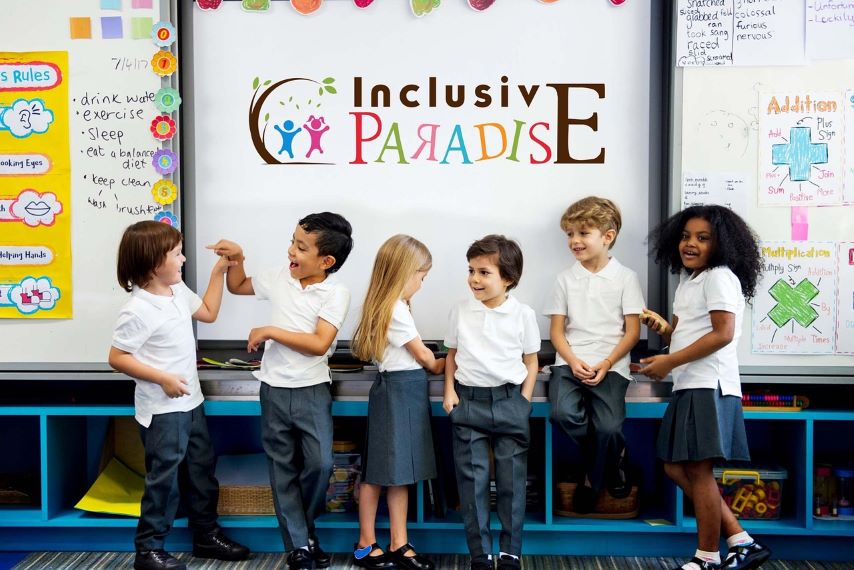
Inclusive education is one of the strategic agendas in achieving Education for All And Sustainable Development Goals (SDGs), namely ensuring inclusive and quality education for all (UNESCO, 2017). Inclusive education affirms that every child, regardless of physical, social, or economic conditions, has an equal right to access education (Booth & Ainscow, 2002).
In the Indonesian context, inclusive education is regulated by Law No. 20 of 2003 concerning the National Education System and reinforced by Law No. 8 of 2016 concerning Persons with Disabilities. The government emphasizes that implementing inclusive education is a shared responsibility between the central and regional governments.
West Sumbawa Regency (KSB) as an autonomous region in West Nusa Tenggara Province is committed to realizing inclusive education in line with the program Child-Friendly Regency (Ministry of Women's Empowerment and Child Protection, 2023).
Despite the implementation of various policies, inclusive education practices in the field still face challenges such as limited teacher assistants, limited infrastructure, and the persistence of social stigma against children with special needs. Therefore, this study seeks to describe the dynamics of inclusive education implementation in West Sumatra Province comprehensively and based on actual data.
Regional Policies and Government Efforts
The West Sumbawa Regency Government has integrated inclusive education into Regional Medium-Term Development Plan (RPJMD) 2020–2025, with a focus on improving educational services for children with special needs. The KSB Education and Culture Office has appointed several schools as inclusive school pilot, among others:
- SDN 1 Taliwang, an inclusive pilot school since 2018.
- Taliwang 2 Middle School And SDN 2 Sekongkang, with adaptive class programs.
- Sapugara Bree Inclusive Early Childhood Education Center, which accommodates children with autism and mild mental retardation.
In addition, since 2022 the local government has collaborated with NTB Teachers' Center to carry out the “School Community-Based Inclusive Education” training, attended by more than 80 teachers.
According to KSB Education and Culture Office Report (2023), there is 124 children with special needs in the KSB region, where around 751 TP3T have received formal education services.
Implementation Reality in the field
One example of successful inclusive practices occurs in SDN 1 Taliwang, where a student with mild autism successfully participates in regular learning with the support of teachers and peers. Classroom teachers who have received inclusive training are able to adapt their learning methods based on Individual Learning Plan (ILP), and utilizing interactive visual media. This fund is a flagship program of the West Sumbawa Regent, supported by the KSB Advanced Education Card program. (Sumbawabaratpost.com)
However, on the other hand, children with sensory disabilities are still found in Sekongkang District who have not yet attended school due to the lack of dedicated teachers and limited access to transportation. This indicates a gap in inclusive education services between urban and rural areas in West Sumatra.
Local Values and Inclusivity
The principle of inclusivity in KSB is in line with local cultural values. Pariri Lema Bariri, which means "together in goodness and togetherness." This value reinforces the spirit of mutual cooperation and social empathy as the moral foundation of inclusive education. In the local context, this cultural approach helps reduce community resistance to the presence of children with special needs in mainstream schools.
A Challenge
Based on the analysis, there are four main challenges: First, Limitations of accompanying teachers: only 15 teachers in KSB have special training (KSB Education and Culture Office, 2023). Second, Facilities are not yet disability friendly: Most schools do not yet have physical accessibility such as wheelchair ramps. Third, Lack of learning aids: Braille media, hearing aids, and visual devices are still minimal (WHO & World Bank, 2011). Fourth, Social stigma: Some people still think that children with disabilities are not suitable for public schools (Loreman et al., 2010).
Strengthening Strategy
To strengthen the implementation of inclusive education in KSB, it is recommended: Teacher capacity building through ongoing training and specialized educational certification. Data-based ABK mapping for evidence-based policy planning. Inter-agency synergy between the Education and Culture Office, Social Services Office, and Community Health Centers for comprehensive support.
Increasing the inclusive education budget in the regional budget. Public awareness campaign to eliminate the stigma against children with disabilities through community leaders and local media. With these steps, it is hoped that inclusive education in West KSB will develop into a truly equitable and sustainable system.
Conclusion
Inclusive education in West Sumbawa Regency has shown positive progress through regional policies, teacher training, and inclusive school practices. However, challenges such as limited teacher assistants, facilities, and community awareness still need to be addressed.
Cultural values Pariri Lema Bariri is a crucial local potential in strengthening the spirit of togetherness in building an inclusive education system. With synergy between stakeholders, the dream of realizing "education without borders" in West Sumbawa is not impossible, but rather a truly achievable goal.
Bibliography
Booth, T., & Dyson, A. (2006). Improving Schools, Developing Inclusion. London: Routledge.
Booth, T., & Ainscow, M. (2002). The Index for Inclusion: Developing Learning and Participation in Schools. Bristol: CSIE.
Amiryousefi, Department of Education and Culture, West Sumbawa Regency. (2023). 2023 Inclusive Education and Child-Friendly Schools Report. West Sumbawa: Department of Education and Culture.
Ministry of Women's Empowerment and Child Protection. (2023). Child-Friendly District Profile of West Sumbawa Regency 2022–2023. Jakarta: Ministry of Women's Empowerment and Child Protection.
Ministry of Education and Culture of the Republic of Indonesia. (2020). Guide to Implementing Inclusive Education. Jakarta: Directorate General of Elementary and Secondary Education.
Loreman, T., Deppeler, J., & Harvey, D. (2010). Inclusive Education: A Practical Guide to Supporting Diversity in the Classroom. New York: Routledge.
Miles, M. B., & Huberman, A. M. (1994). Qualitative Data Analysis: An Expanded Sourcebook. Thousand Oaks: Sage.
SumbawaBaratPost.com. (2023, May 12). SDN 1 Taliwang Becomes a Pilot Inclusive School in NTB.
UNESCO. (1994). The Salamanca Statement and Framework for Action on Special Needs Education. Paris: UNESCO.
UNESCO. (2017). A Guide for Ensuring Inclusion and Equity in Education. Paris: UNESCO Publishing.
Law of the Republic of Indonesia Number 20 of 2003 concerning the National Education System.
Law of the Republic of Indonesia Number 8 of 2016 concerning Persons with Disabilities.
World Health Organization & World Bank. (2011). World Report on Disability. Geneva: WHO.
Written by: Dahlan Kurniawan. Fifth Semester Student. Faculty of Teacher Training and Education. English Language Education Department. Cordova University
